Island Britt
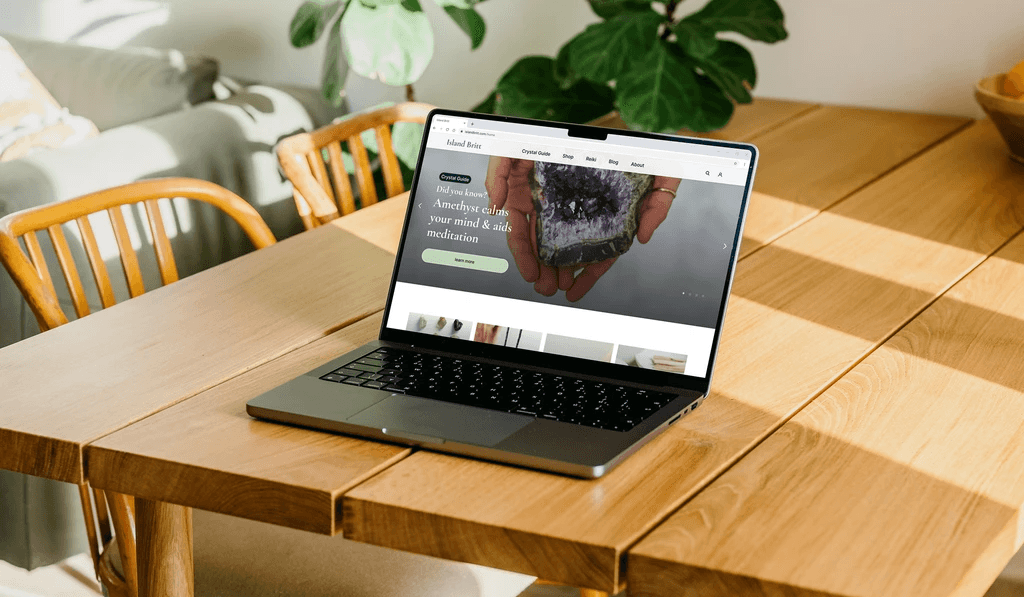
A warm, story-led e-commerce redesign that connects users with the meaning behind crystal jewelry
view project
view project
year
2025
timeline
2 months
project
responsive website redesign
role
client
Background
Problem
Solution

"Small businesses feel like they put more heart and love put into the experience.”
Jenny
“Small business sites are often harder to navigate.”
Billie
“I like hearing the story of the shop owner and the product.”
Carrie
"The business' values and reputation in its community are important."
Aria

I studied four crystal jewelry sites across different scales - two large recognized brands, one mid-sized retailer, and one small independent. The size range was intentional: larger brands benchmarked the polished, familiar design language users associate with trust, while smaller brands revealed where gaps in professionalism were quietly driving customers away. Across all four I focused on two things: how crystal education was integrated with product pages, and how filtering worked. User interviews had made clear that slow or confusing filters meant abandoned sessions.
I also studied how brands with strong storytelling wove founder narratives into the shopping experience. Users were significantly more likely to purchase when they felt aligned with the person behind the business.
This research led to two specific UX decisions: product page pop-ups as an alternative to automatic redirects, and a side add-to-cart drawer, both keeping users on the shop page and open to further browsing.
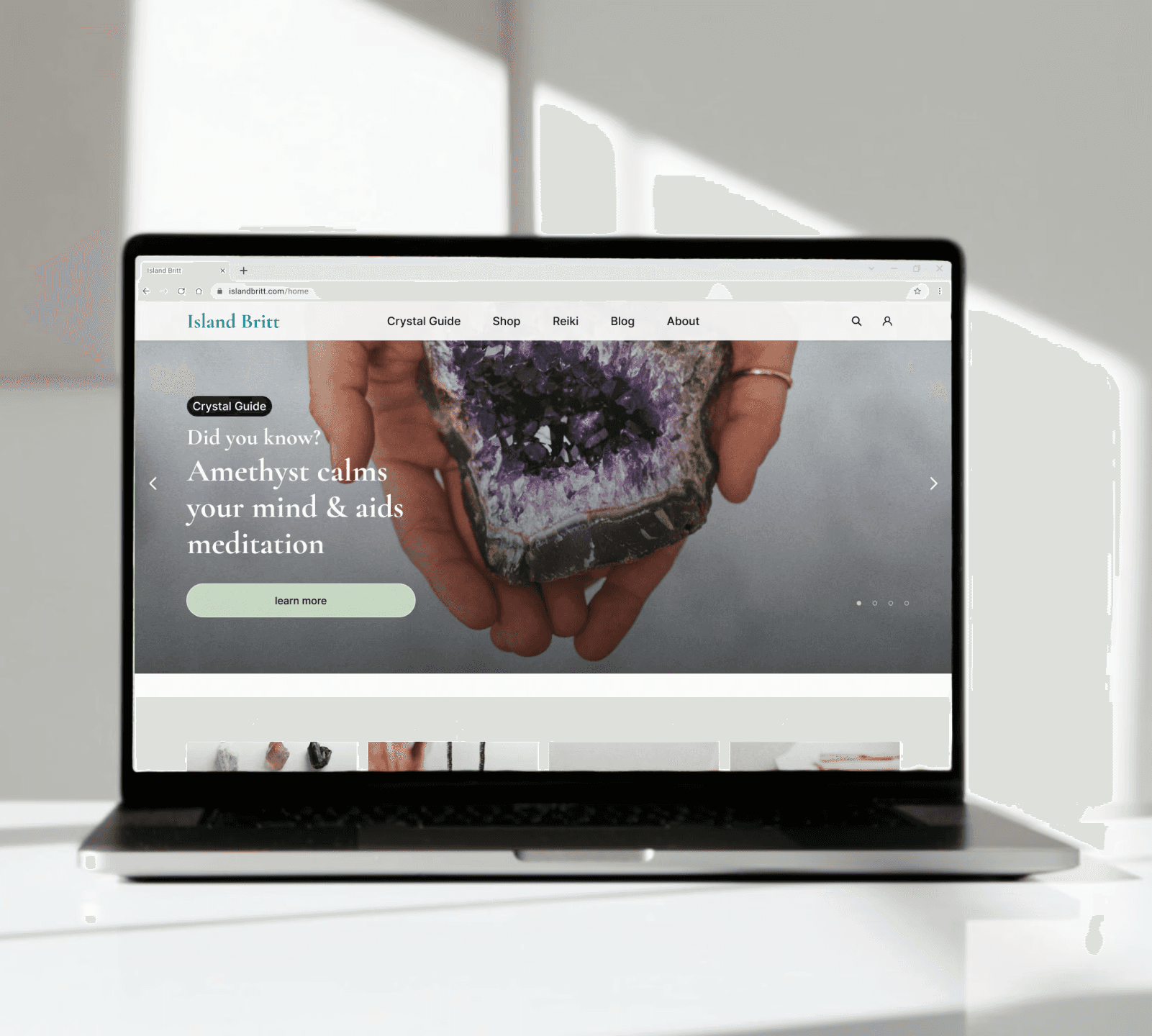
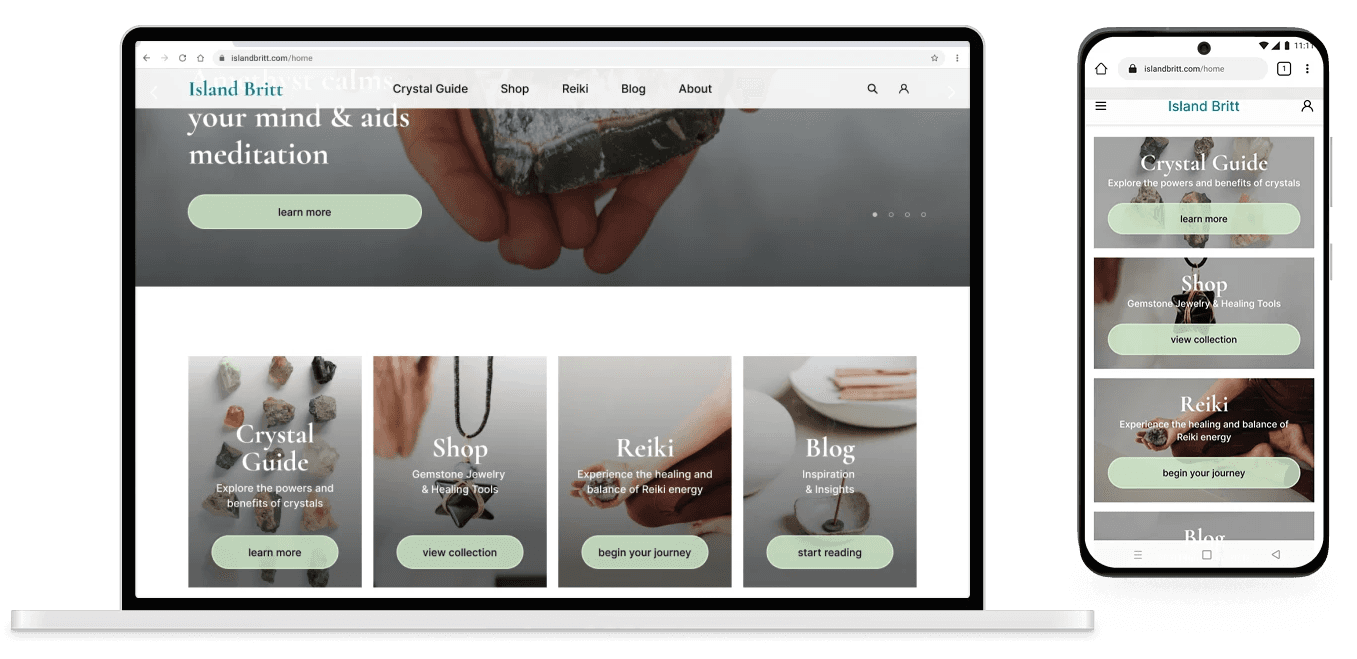
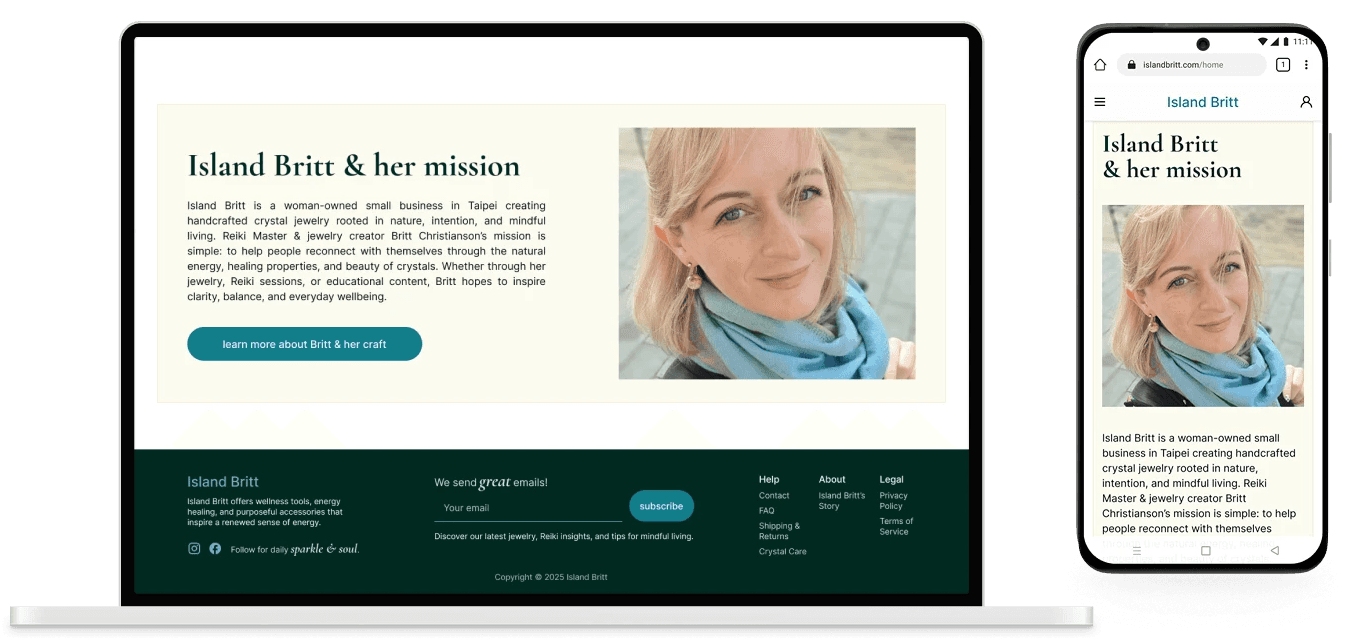
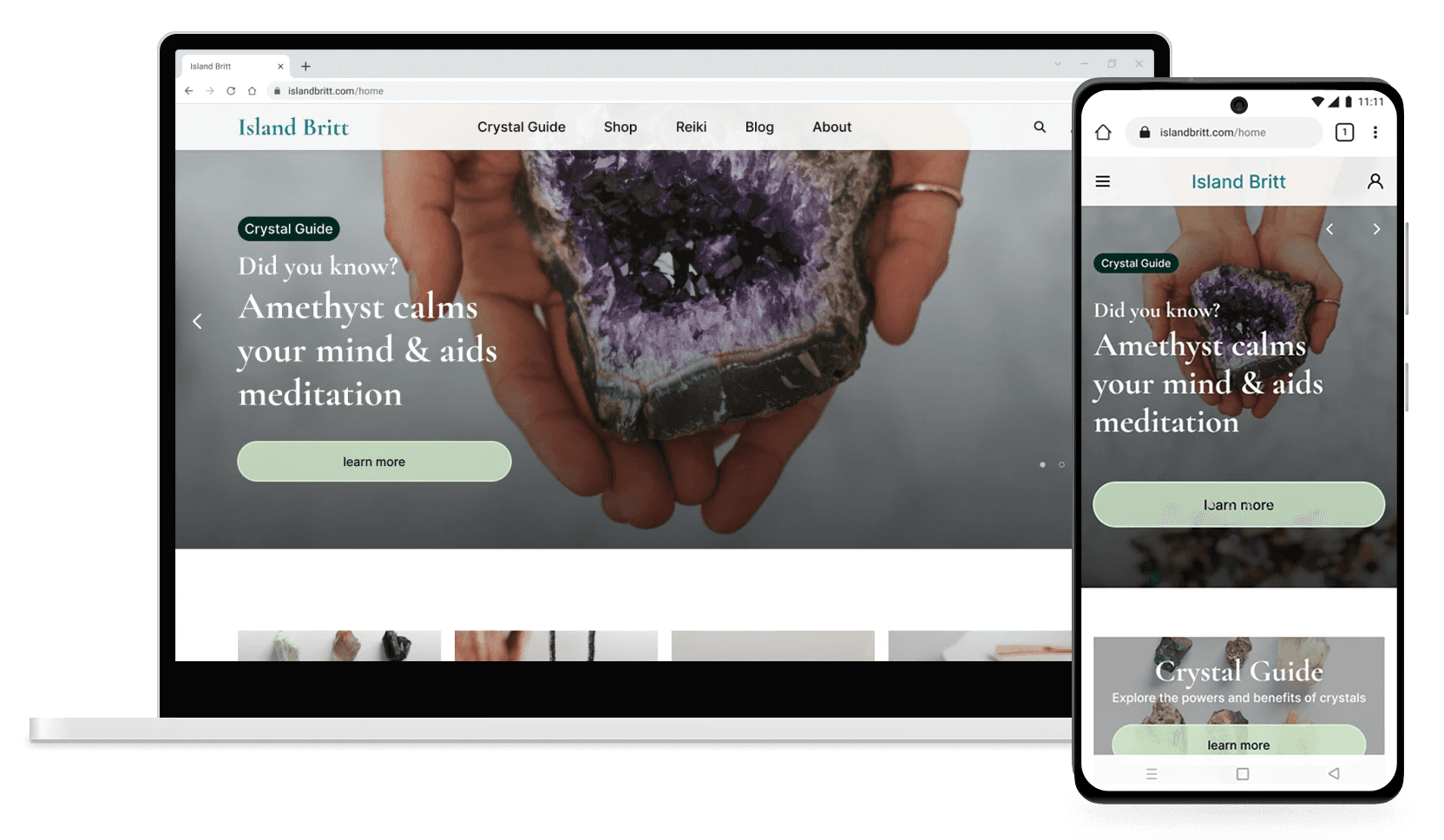
After aligning with Britt on priorities, product discovery and crystal education took the front seat. Her story was important but secondary - enough of it needed to live on the homepage to build connection, with a full About page deferred to a future phase.
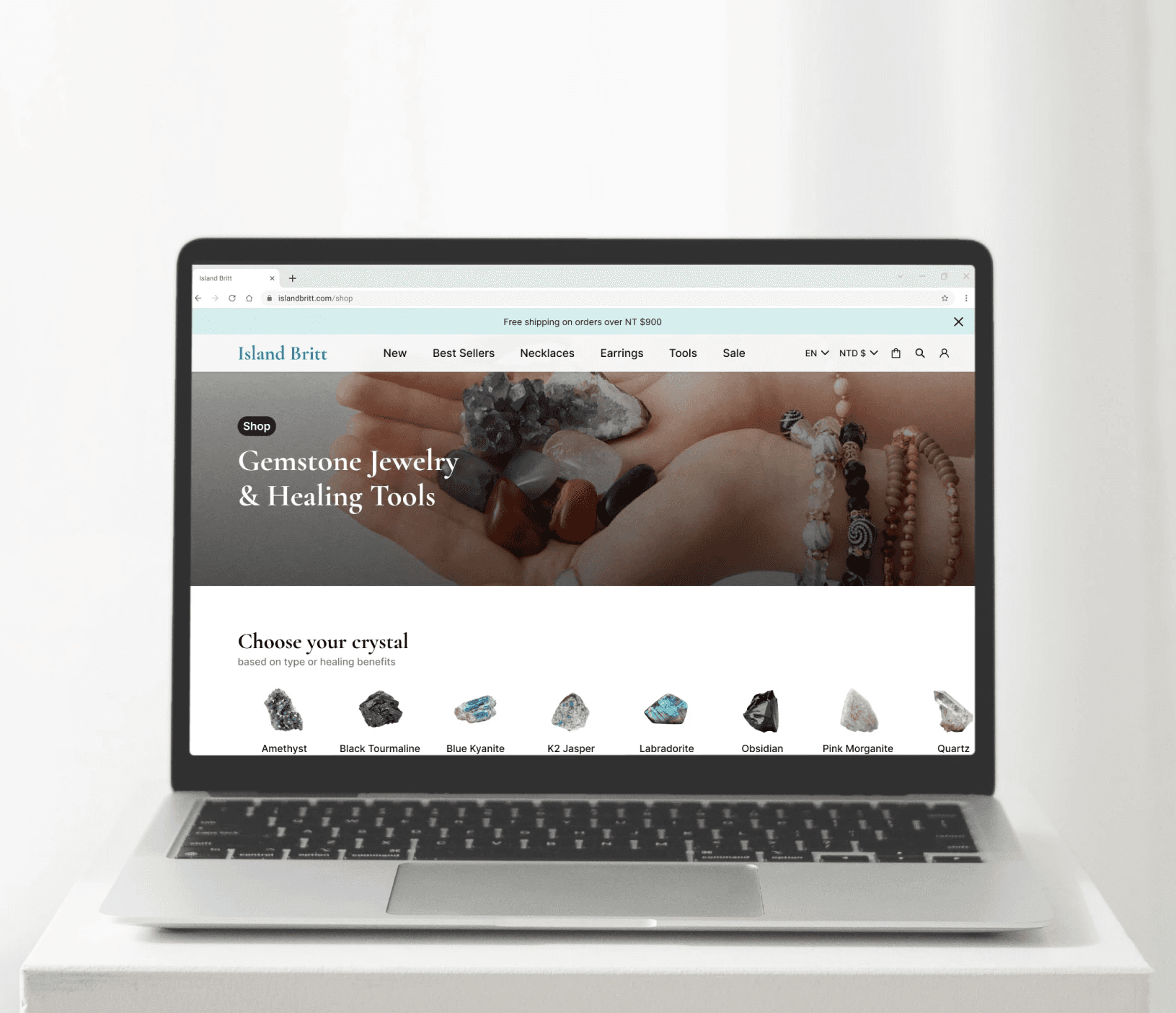
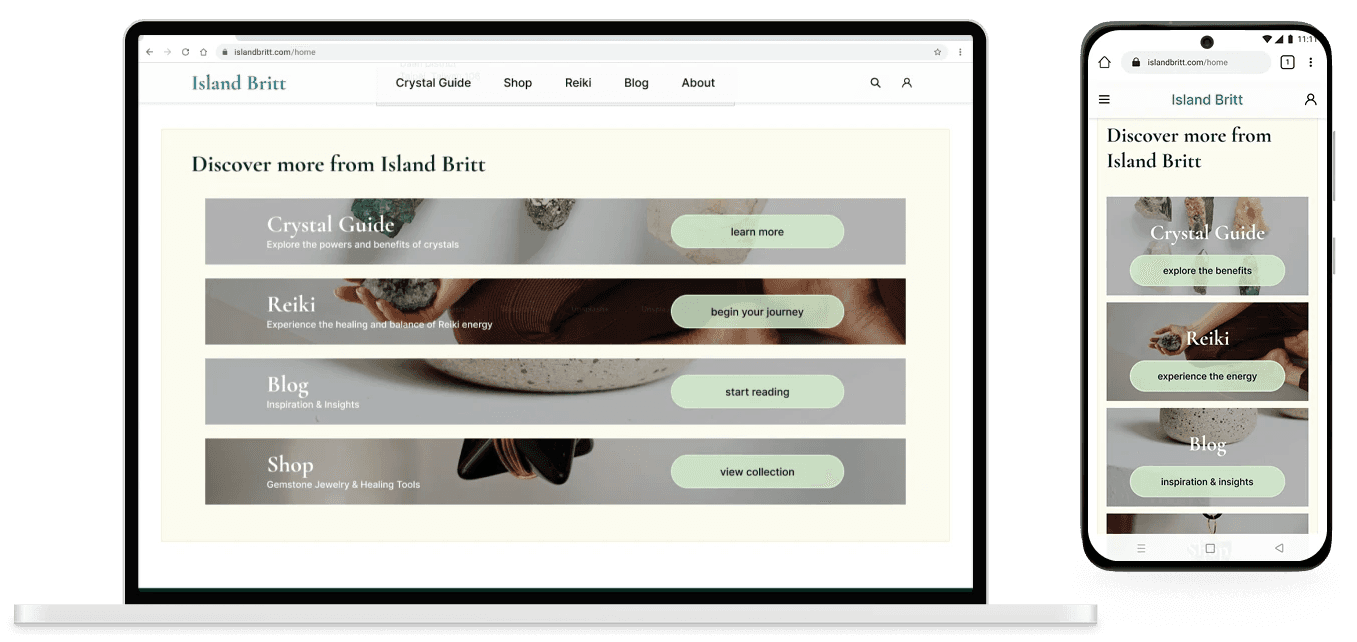
And in the shopping flow featured below, a row of benefit-style cards circulated users through Britt's broader offerings: her story, crystal education, Reiki services, and her crafting process. Each card has a clear CTA, keeping the experience connected without overwhelming the primary shopping flow.
after redesign
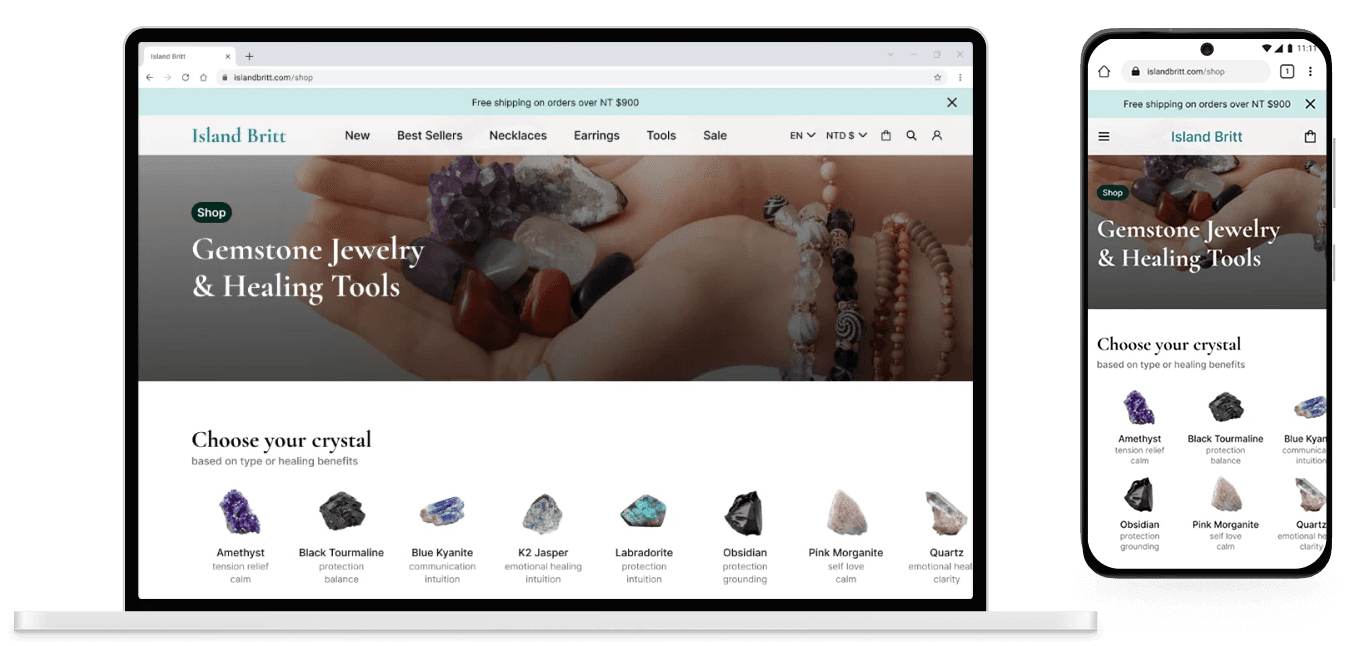
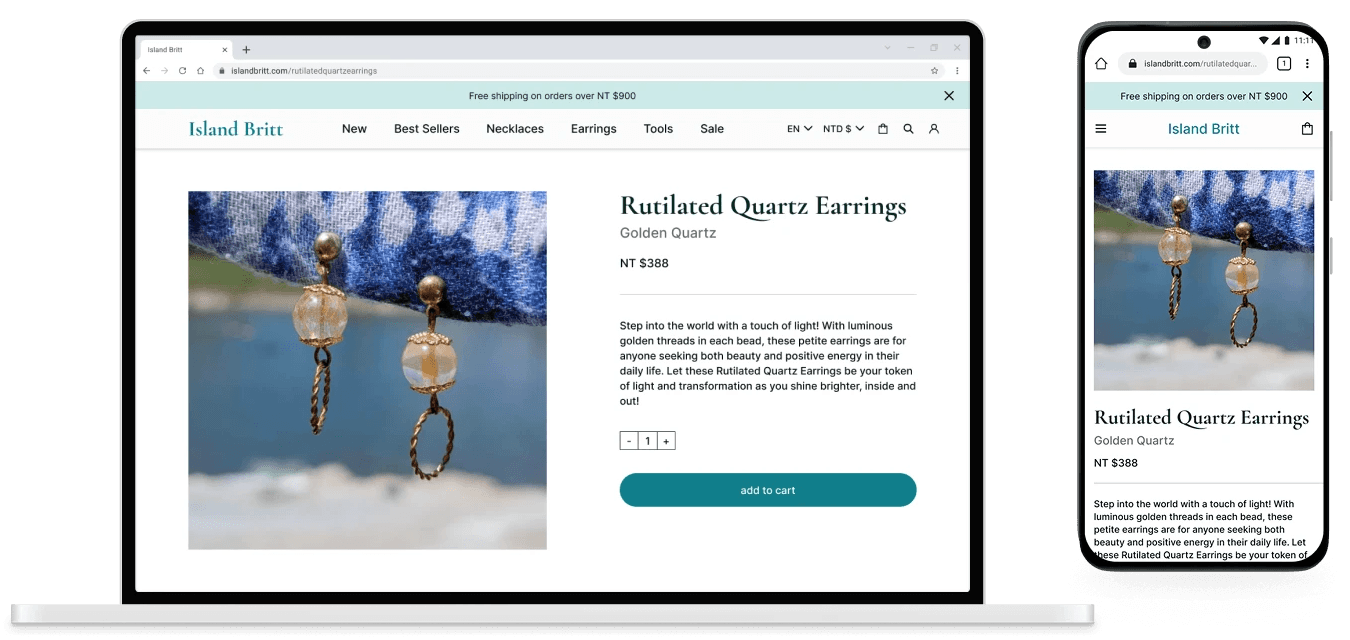
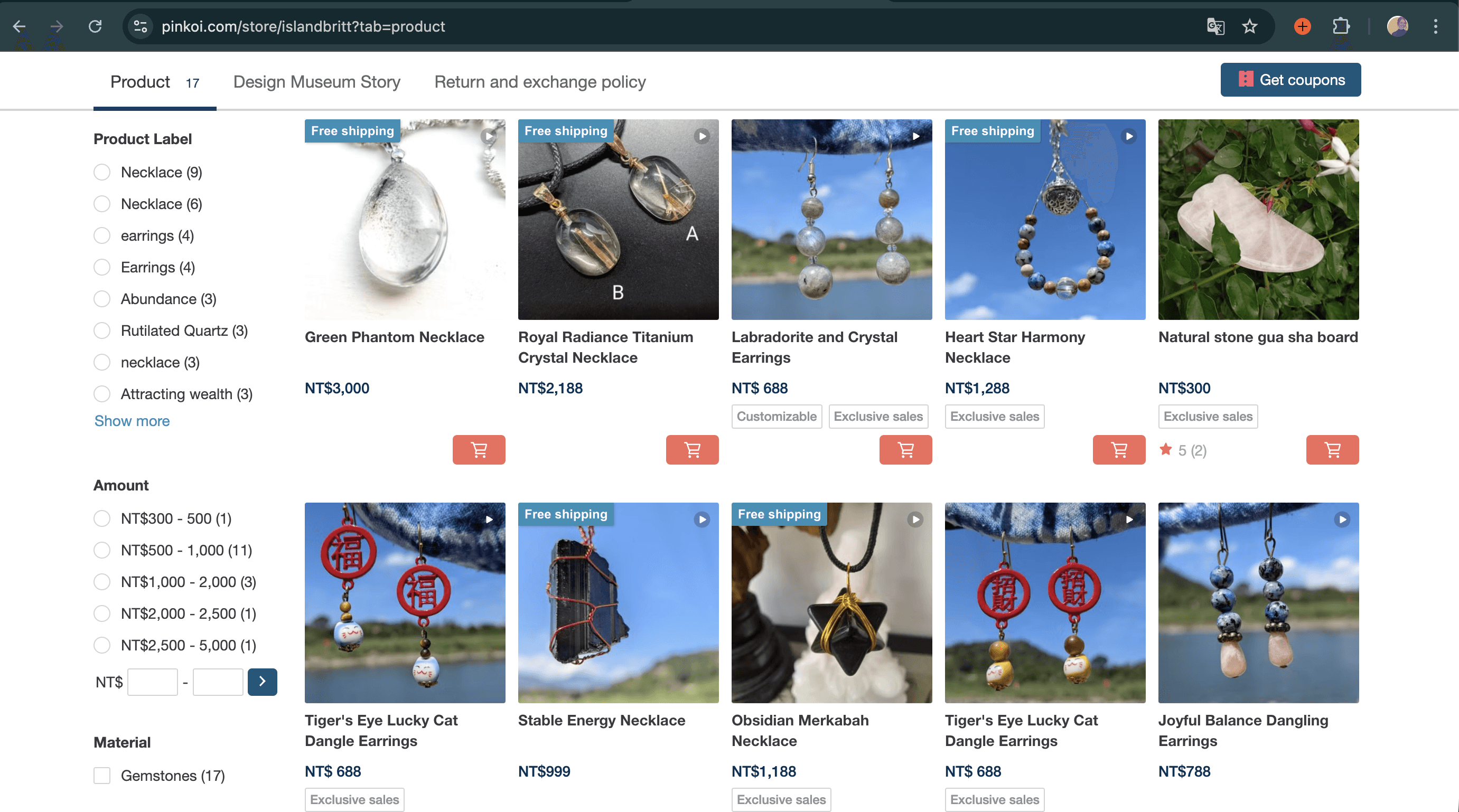
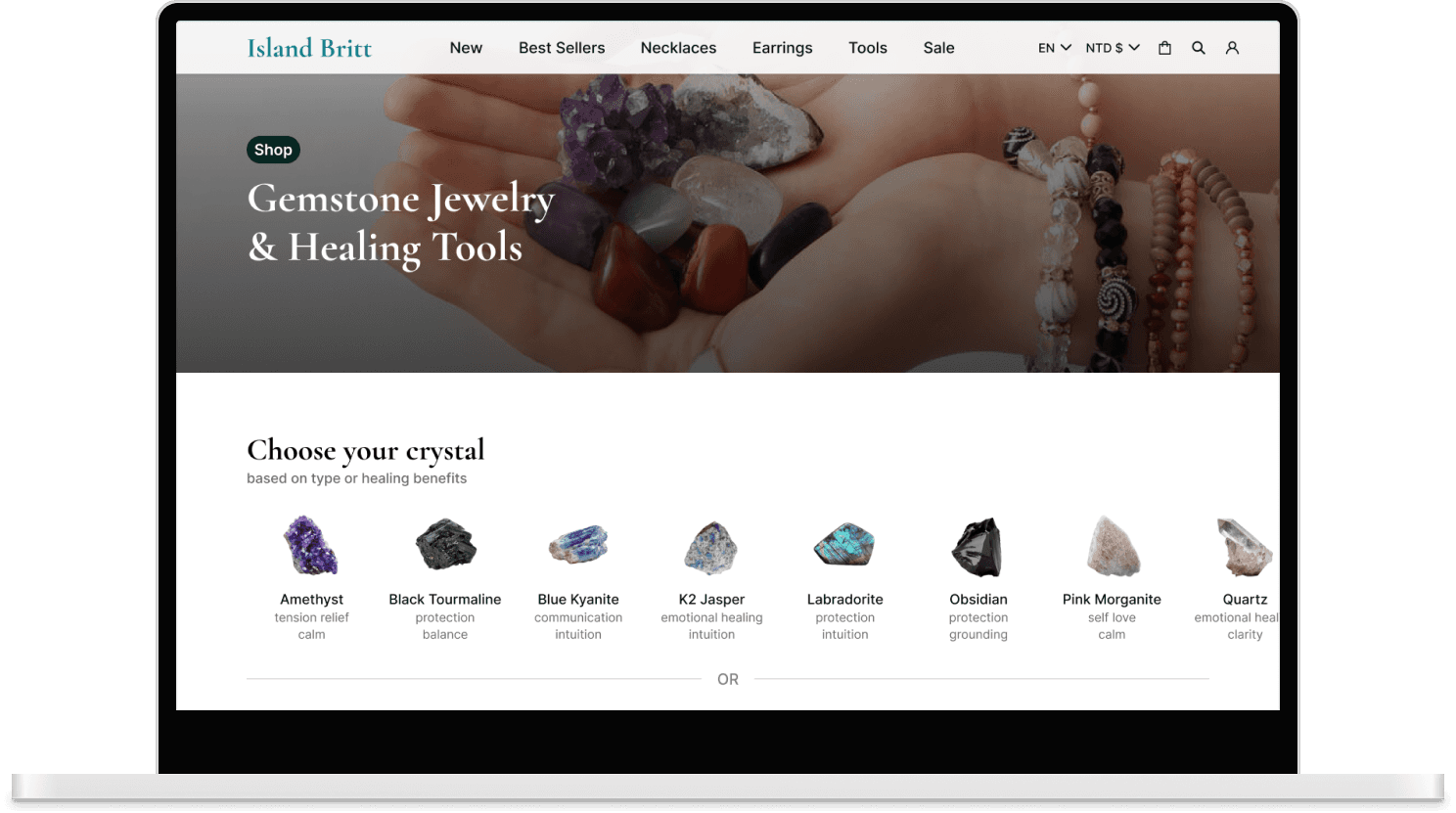
The existing site used a left-side text filter panel - familiar, but overwhelming and visually disconnected from the products. Since many users weren't familiar with all the crystals, a visual filtering approach made more sense: showing the actual stones alongside their healing properties to serve both discovery and education simultaneously.
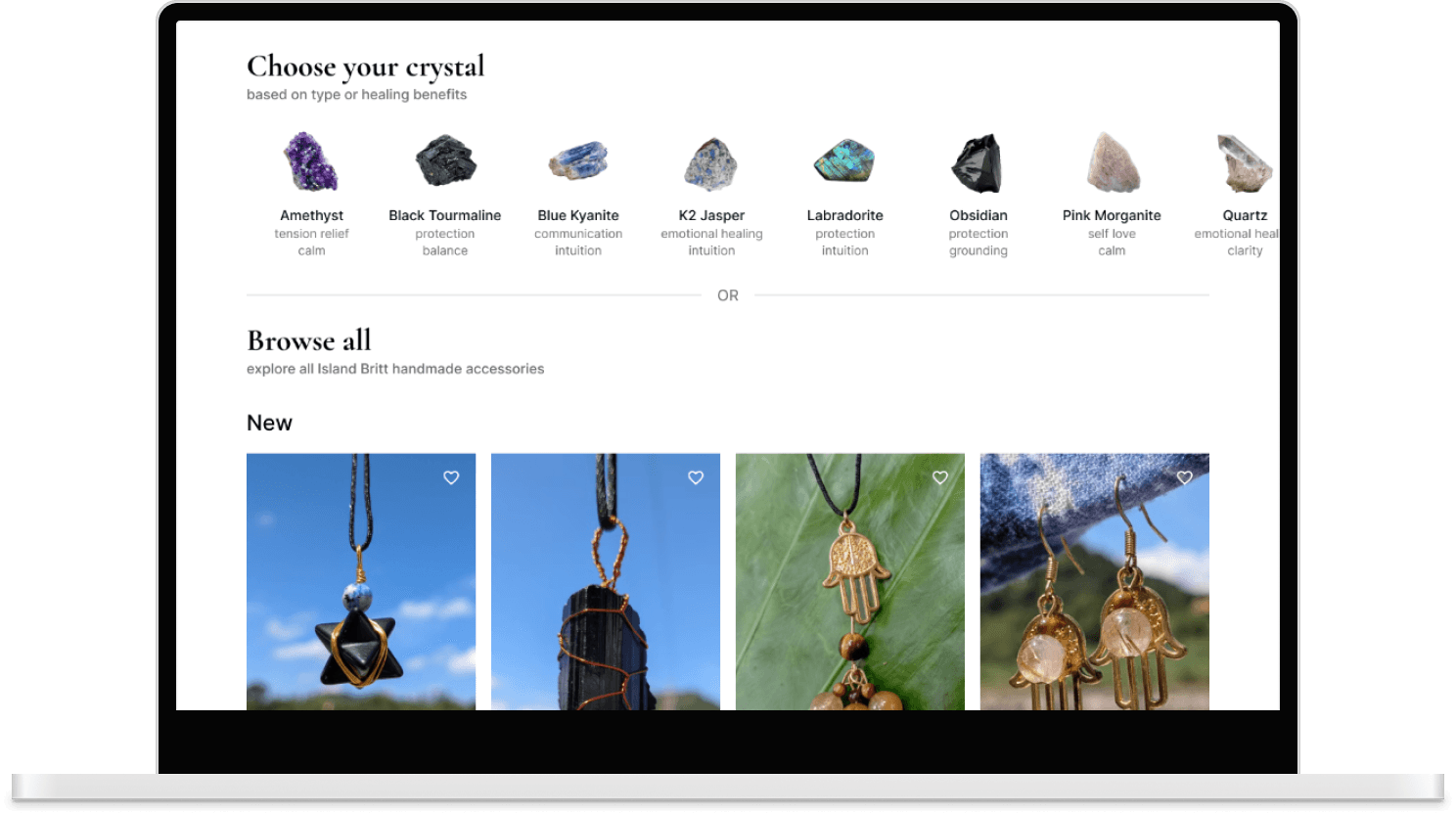
I moved to horizontal filters at the top of the page. My first version had two rows (crystal type and jewelry type) but this created its own cognitive load. I simplified to one primary row of visual crystal tiles and moved jewelry type filtering to the top navigation.
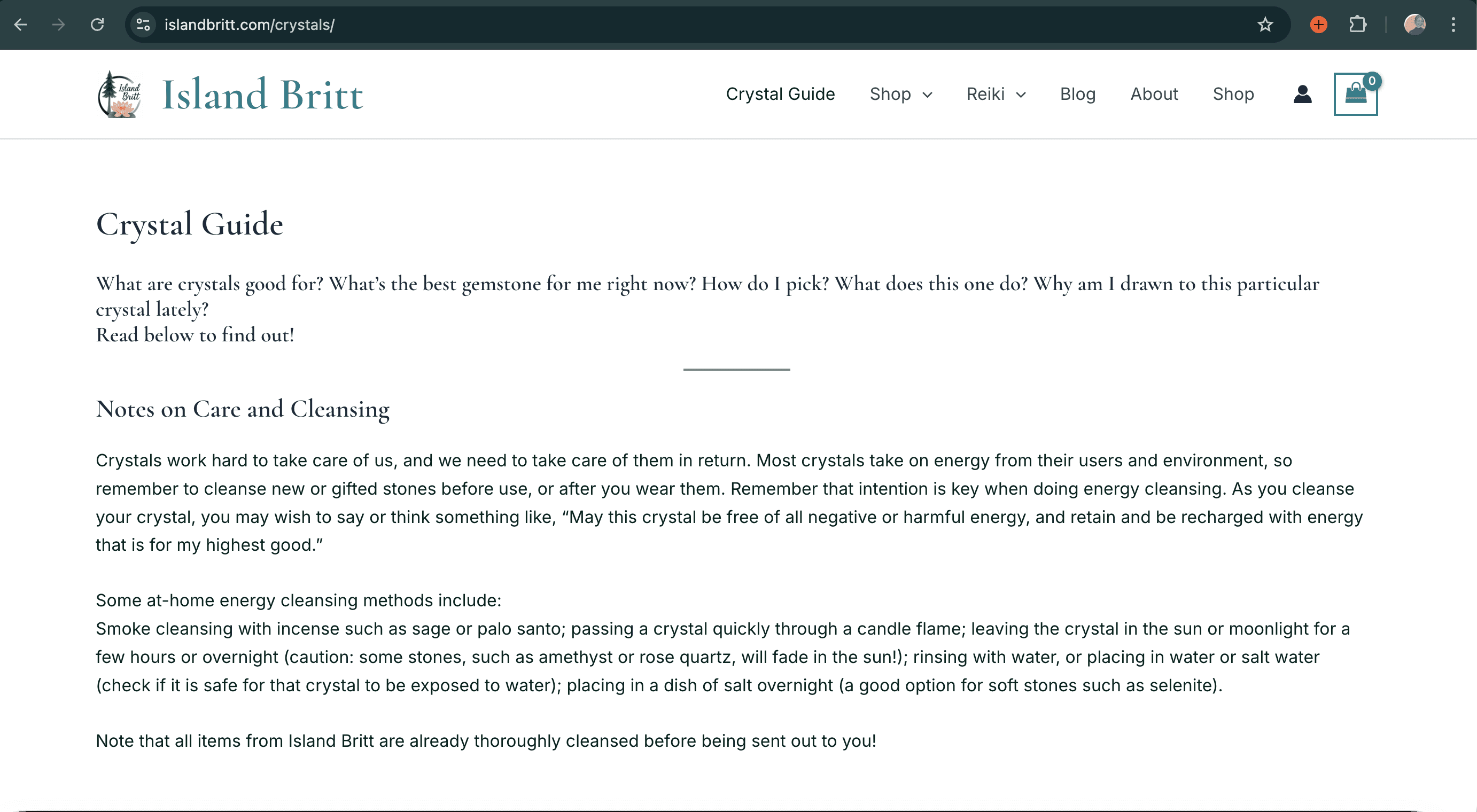
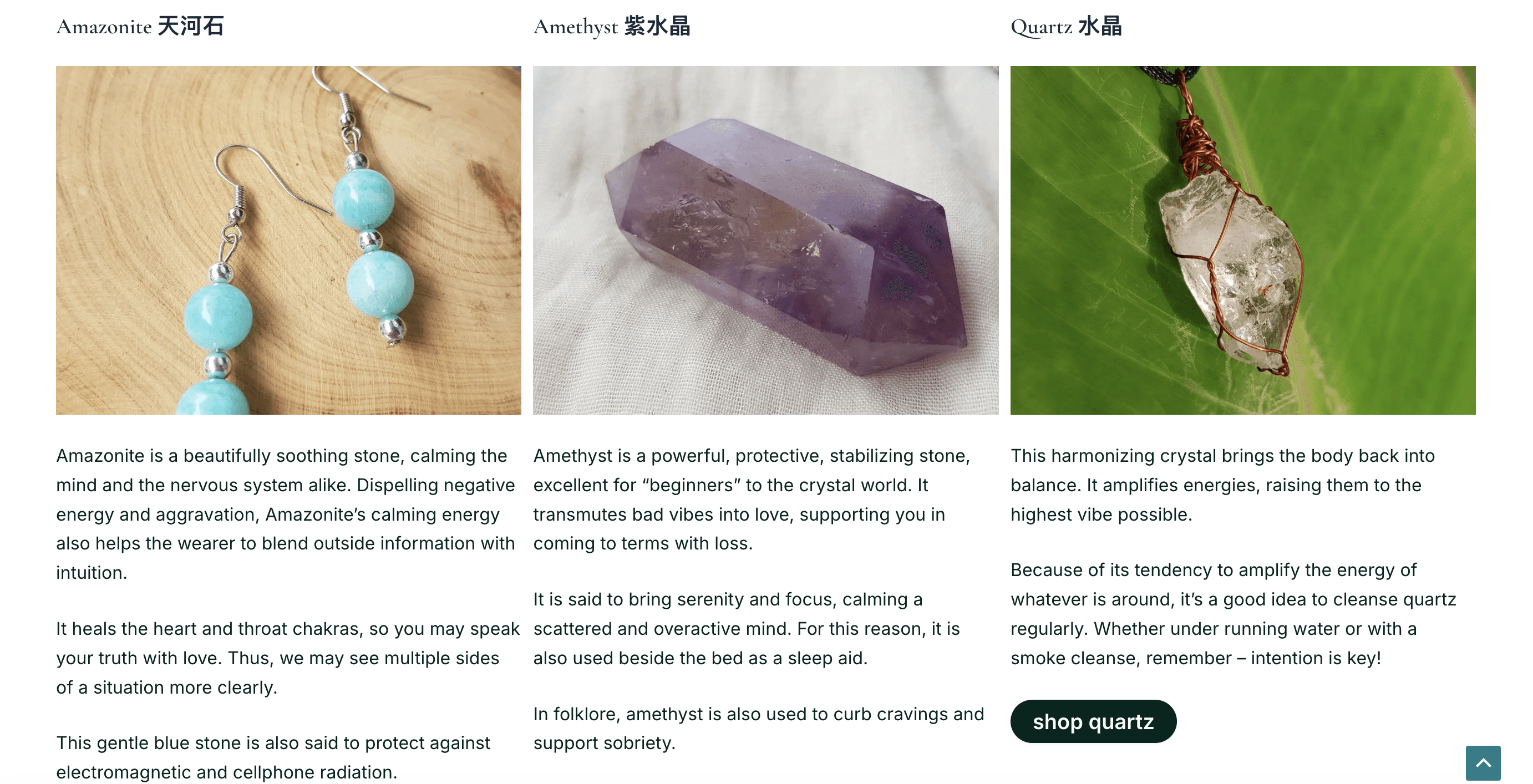
A usability testing insight drove one more iteration: filtering on the same page wasn't obvious enough - users couldn't tell it had happened. The solution was a dedicated page per crystal type, which also created space for deeper educational content, directly connecting the research insight about education driving purchase confidence to a structural design decision.
problem
solution
solution
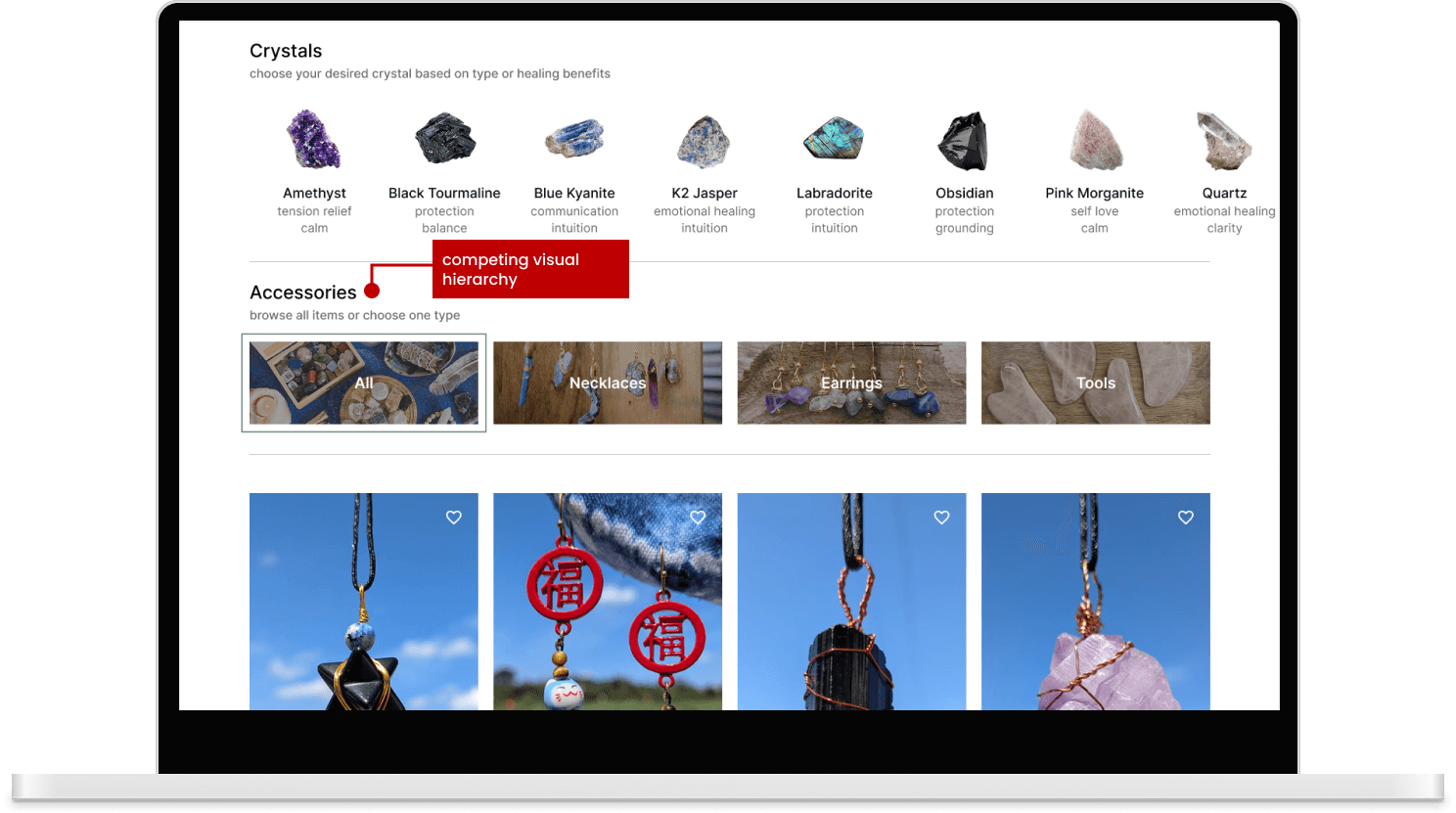
Problem: The crystal filter wasn't immediately recognized as interactive and visually competed with the accessories filter. Solution: Headings were clarified, visual hierarchy strengthened, and accessory filters were moved to the top navigation as anchor links, organizing items by section rather than layering filters, which better matched the size of Britt's product range.
problem
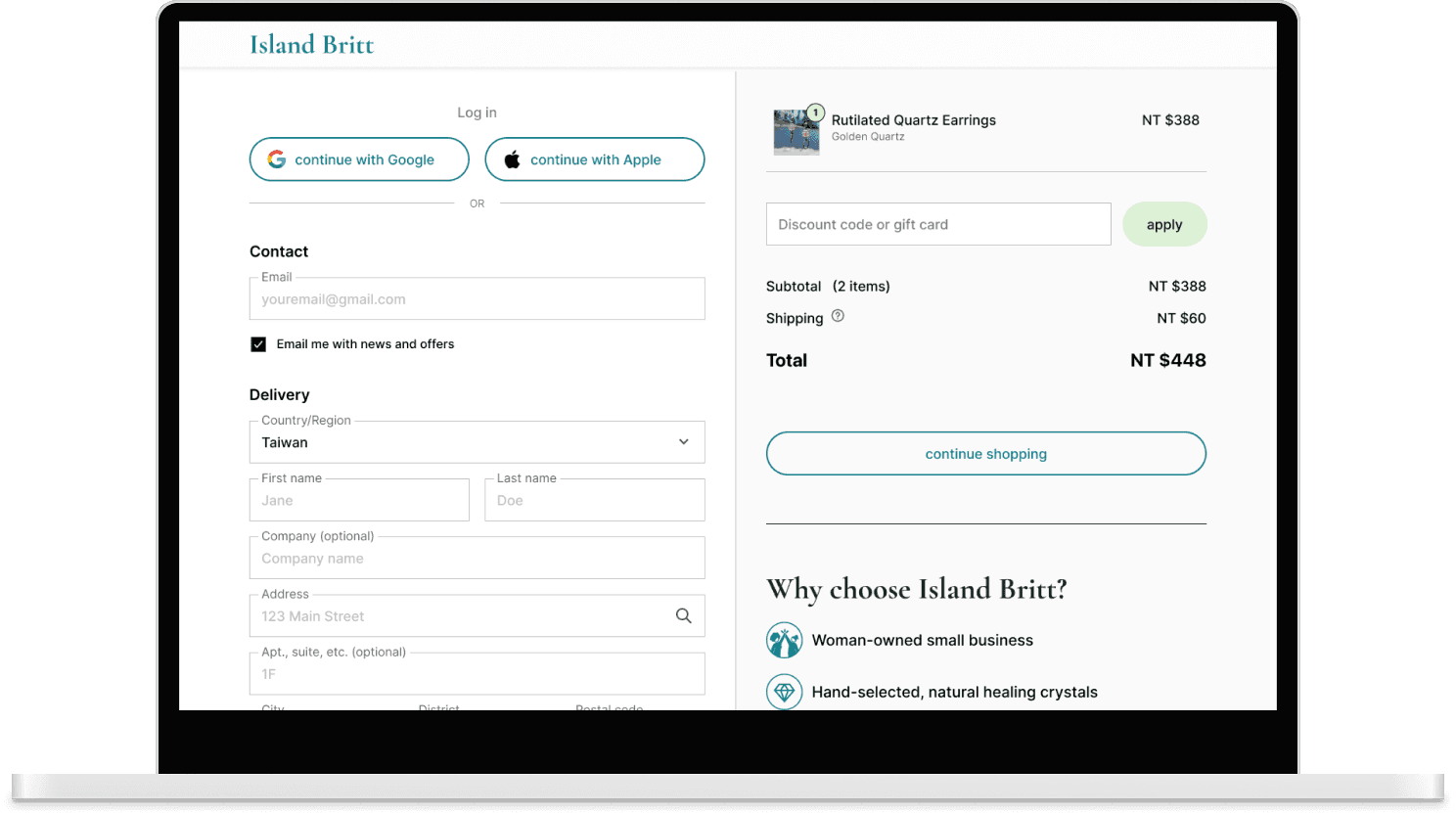
solution
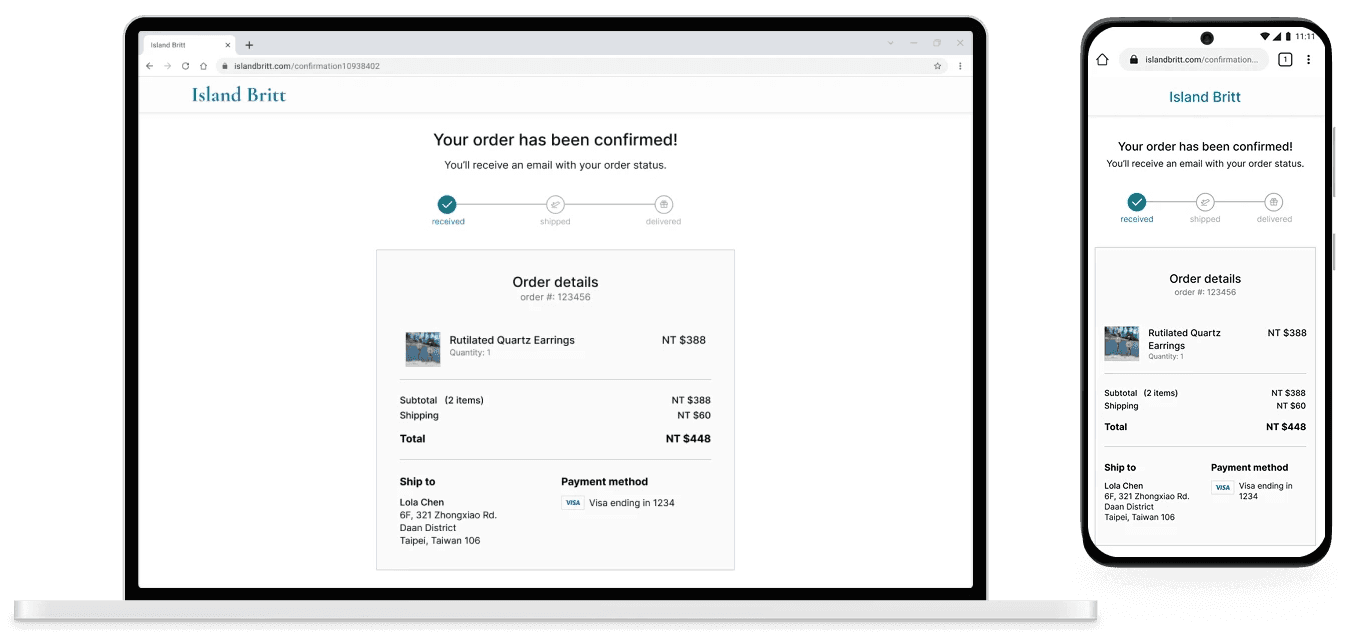
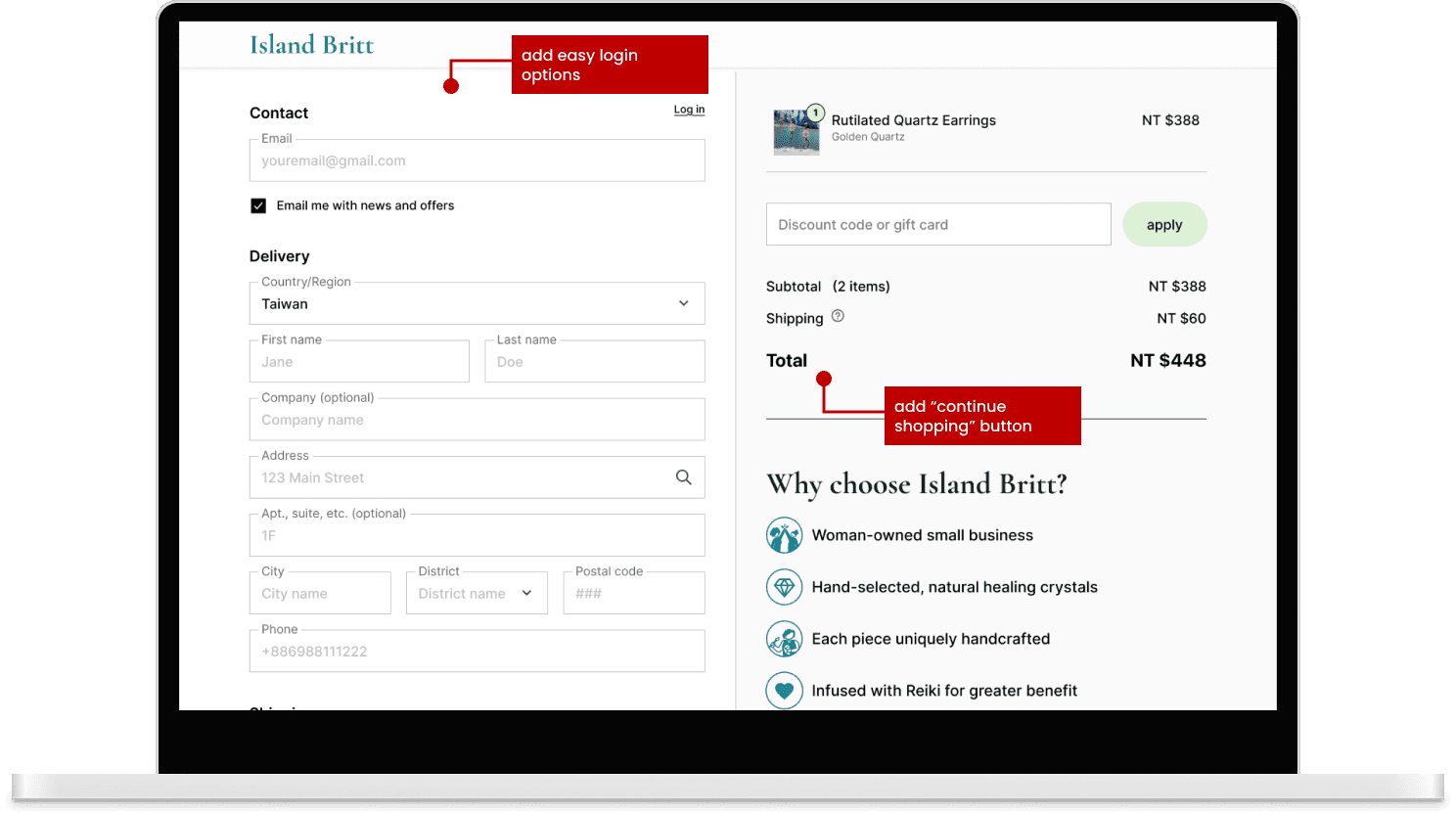
Problem: The checkout page made logging in and continuing to browse feel cumbersome. Solution: Google and Apple login options were added for faster sign-in, along with a "Continue Shopping" button to encourage last-minute exploration before completing a purchase.
all users described the site as intuitive, legitimate, and easy to move through
ease of shop navigation rated 4.2/5 against a 4/5 target
users felt confident purchasing due to clear product details, familiar checkout patterns, and an uninterrupted flow
checkout experience rated 5/5 against a 4/5 target
five users independently praised the UI as clean, elegant, and professional
crystal imagery helped users visualize jewelry styles quickly
100% of users said they would buy in real life, against an 80% target
The redesign improved trust, usability, and product discovery. Users felt informed, emotionally connected, and confident enough to purchase - which was the goal from the start.
view prototype
The most consistent challenge was working within the rhythms of a real client relationship. Island Britt is a passion project alongside a demanding day job, which meant momentum naturally ebbed and flowed. The project is currently paused while I wait for the opportunity to transfer the Figma design to her WordPress site. The harder design challenge was working around missing assets. Users consistently asked for product imagery showing pieces to scale and being worn, as well as short videos from multiple angles - both meaningful trust-building elements in e-commerce. Britt understood their value, but creating them wasn't within her bandwidth at this stage. Working with assets outside your control is a real tension in client work. In future projects I'd establish clear asset expectations upfront - a small conversation that saves significant friction mid-project.
This project challenged my initial assumption that visual polish and a familiar checkout process alone drive trust. While both proved important during testing, the deeper insight was more nuanced: storytelling, authenticity, and connection to the maker are functional parts of a small business shopping experience, not decorative ones. Every interview and testing session reinforced that the emotional side of e-commerce is just as important as the structural side.
Coordinating design work around evolvign client assets was the biggest practical challenge. When materials weren't available on my timeline, I adapted by using placeholder visuals to keep momentum. Next time I'd establish clearer asset expectations upfront - a small conversation that saves significant time mid-project.